What Are Chatgpt Ads & How Do They Work?
Quick Highlights
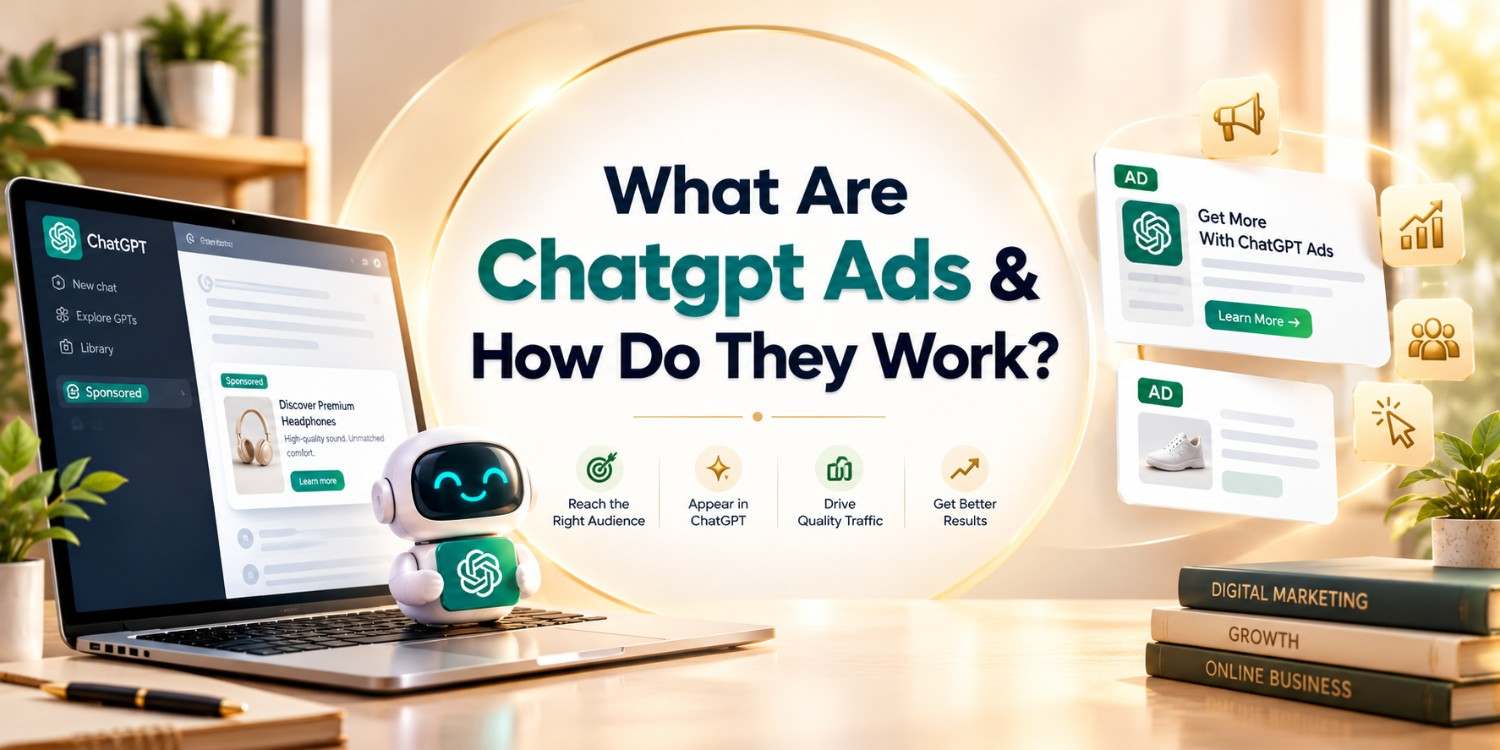
- ChatGPT ads are paid promotions shown separately
from regular answers.
- Eligible Free and Go users may see ads in
supported regions.
- Ad selection considers conversation topics and
advertiser campaign details.
- Advertisers cannot control ChatGPT answers
through paid promotions.
- Private chats and personal details are not
shared with advertisers.
- Users can manage ad personalization through
available account controls.
- Businesses can track views, clicks, and
supported conversion events.
Have you ever asked ChatGPT for product suggestions and
wondered how a sponsored ad could fit into the conversation? ChatGPT ads are
paid promotions that appear separately from regular AI answers. They give
businesses a way to show their products or services to people who may find them
useful.
ChatGPT ads are part of OpenAI's effort to support access to
its AI tools. Eligible users may see ads below ChatGPT responses. The ads have
clear labels, so users can tell the difference between sponsored content and
answers from the AI.
For example, a person may ask for a digital marketing agency in Delhi NCR. A marketing
company could show an ad that relates to this topic. The user can view the
promotion and visit the advertiser's website if interested. The ad does not
become part of its answer.
This type of advertising differs from a standard search
engine ad. A conversation can reveal a person's needs across several messages.
The ad system can use that context to find relevant promotions. However, an ad
will not appear after every question.
How do ChatGPT ads work?
They work through a separate advertising system that selects
paid promotions based on relevance to the conversation. The system considers
the user's current topic and the information supplied by advertisers. It can
also use selected signals from past ChatGPT activity when ad personalization is
enabled.
The process follows a few main steps.
- A user starts a conversation with ChatGPT. The
topic may involve a product, a service, a trip, or another everyday need.
- The ad system checks if an eligible promotion
fits the conversation. It considers the topic, the user's intent, and the
details of available ads.
- The system selects a suitable ad from eligible
campaigns. Advertiser bids and relevance can affect the selection.
- ChatGPT displays the sponsored promotion
separately from its answer when a suitable match exists.
- The user can view the ad, open its landing page,
or dismiss it.
Who can see ChatGPT ads?
They may appear for eligible users on the Free and Go plans
in supported regions. Users on Plus, Pro, Business, Enterprise, and Edu plans
do not see these ads under OpenAI's current policy. Accounts identified as
belonging to people under 18 are also excluded.
Access depends on the plan, region, and stage of the
advertising rollout. Not every eligible user will see an ad in every chat. It
began testing ads in the United States in February 2026. It has since expanded
testing to selected markets.
Users who prefer an ad-free experience can check the
available plan options. OpenAI also offers a free option without ads in
supported regions. This option has lower usage limits and fewer available
tools. The exact choices can vary by region and over time.
People should check the current details in ChatGPT settings
before changing plans. The options shown in their account provide the best
guide to what is available.
Free plan users may see sponsored promotions in supported
regions.
- Go plan users may see ads as the rollout
expands.
- Plus and Pro users can use ChatGPT without these
ads.
- Business, Enterprise, and Edu accounts do not
have ChatGPT ads.
- Temporary Chats do not show ads.
- Ads do not appear in every conversation, even
for eligible users.
How does ChatGPT choose which ads to show?
It selects ads based on the subject of a conversation and
the likely relevance of each promotion. It can consider the user's current
question, the purpose of the conversation, ad text, the advertiser's website,
and targeting details supplied by the advertiser.
Ad personalization can affect this process. When
personalization is enabled, selected signals from past chats, memory, and ad
interactions may help the system choose promotions. When personalization is
turned off, the system can still use the current conversation to select
relevant ads.
For example, consider a user who asks about choosing a SEO agency in Delhi. The system may consider
promotions for marketing or related products. A business that sells unrelated
goods may not fit the conversation as well.
Advertisers can provide details about the topics and needs
that suit their products. These details guide ad selection, but they do not
guarantee that an ad will appear in a particular chat.
It does not show ads in sensitive contexts where a promotion
could harm trust or create a poor experience. The advertising rules also limit
the types of products and topics that can appear. These safeguards help keep
promotions relevant and suitable for the setting.
Several factors can affect the ad a user sees:
- The topic and purpose of the current
conversation.
- The headline and description written by the
advertiser.
- The products or services on the advertiser's
landing page.
- The targeting details and bid set by the
advertiser.
- Selected past activity, if ad personalization is
enabled.
Do ChatGPT ads affect answers or share private chats?
No. They do not control the answers generated by ChatGPT.
OpenAI runs ad selection separately from the system that creates regular
responses. Advertisers cannot pay to change an answer, alter its ranking, or
make ChatGPT recommend their products.
This distinction matters because users often rely on ChatGPT
to compare choices and understand a topic. A sponsored promotion is a paid
placement. It does not mean it has checked, approved, or recommended the
advertised product.
Privacy is another key concern. It states that it does not
share users' conversations, chat history, memories, or personal details with
advertisers. Advertisers receive grouped performance data, such as total ad
views and clicks, rather than access to private chats.
To review these options, open ChatGPT settings and look for
Ad Controls if they are available on your account. You can also use the
three-dot menu on an ad to hide it or report a concern.
If you want to discuss a specific promotion with it, use the
ad's menu and select Ask it when that option appears. This action shares the
selected ad with ChatGPT for discussion. It does not give advertisers access to
your other conversations.
Users can also control parts of their ad experience.
Available controls may include options to:
- Turn off ad personalization.
- Dismiss an ad that they do not want to see.
- Give feedback about a promotion.
- Check why a particular ad appeared.
- Clear data used for ads.
How can businesses advertise on ChatGPT?
Businesses can use them to reach people who discuss needs
related to their products or services. This gives brands another way to connect
with potential customers during research and product comparisons. Access to
advertising tools depends on the advertiser's country and current eligibility.
The landing page should match the promise in the ad. For
example, a company that promotes office chairs should direct users to a
relevant page about those chairs.
Businesses can review results through available reporting
tools. Common measures include ad views, clicks, and supported conversion
events.
They can offer a new way to reach people who discuss
products in natural language. However, an ad does not guarantee a click, sale,
or enquiry.
Businesses can start by checking OpenAI's advertising
platform. The main steps include:
- Create an advertiser account when the platform
is available in your market.
- Set a campaign goal, such as getting website
visits or increasing ad views.
- Prepare an ad headline, description, image, and
landing page.
- Set the campaign budget and bidding details.
- Review the campaign results and adjust the ad
when needed.
Final Point of View
ChatGPT ads are paid promotions that may appear below
responses for eligible users. The system selects ads based on conversation
topics and other allowed signals. Advertisers cannot change ChatGPT answers or
access private chats. Users can manage available ad controls. Businesses can
use these promotions to reach relevant audiences and track campaign results
with the help of a paid advertising company in Delhi.