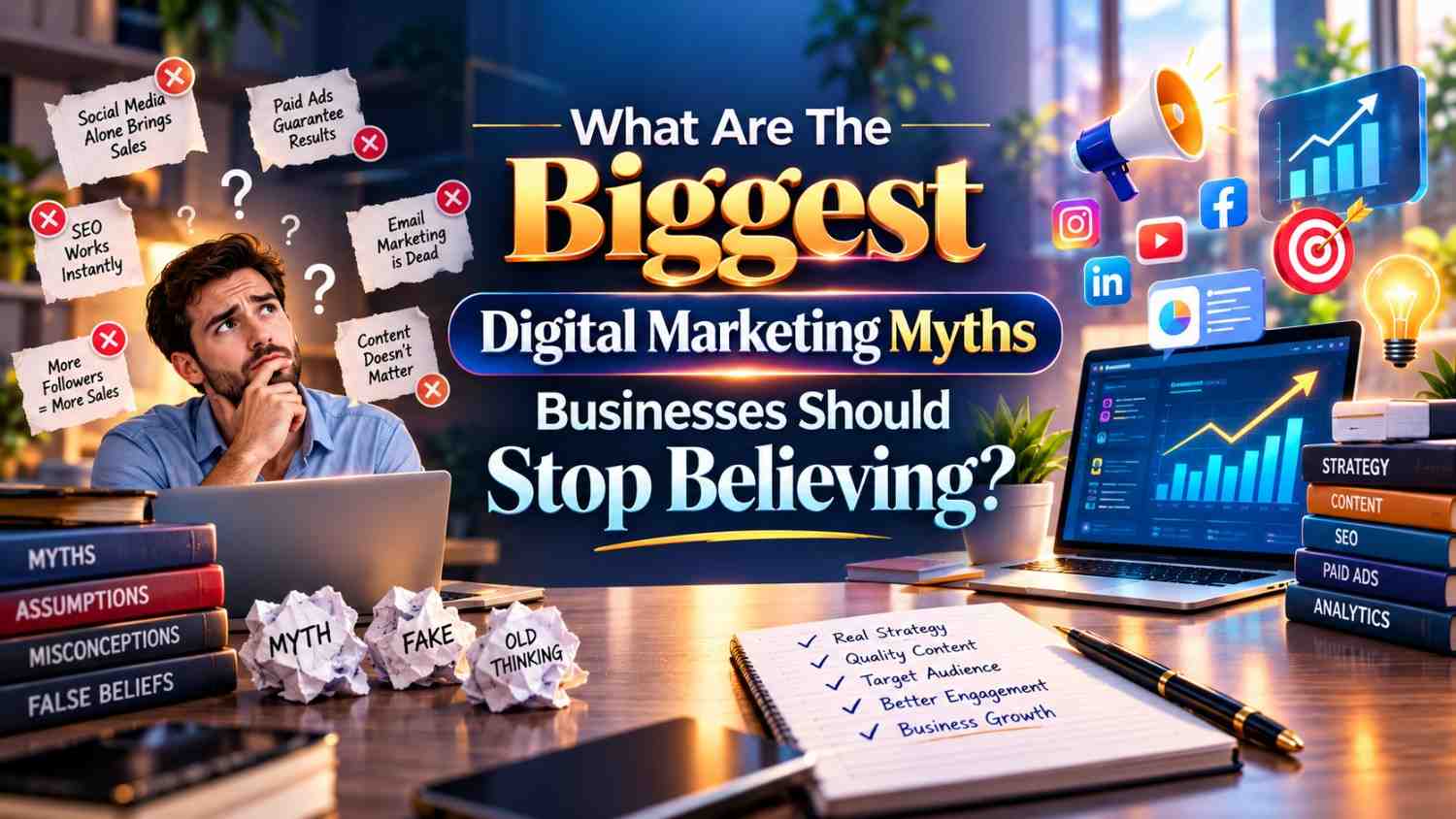
What Are The Biggest Digital Marketing Myths Businesses Should Stop Believing?
Quick Highlights
- Small businesses can start digital marketing
with a focused budget.
- SEO needs useful content, technical checks, and
patience.
- Social media works best alongside other suitable
marketing channels.
- Website traffic matters only when it supports
business goals.
- Paid ads need clear targets, relevant offers,
and regular checks.
- AI tools support marketers but still need human
review.
- Every business needs a strategy that fits its
customers.
Do you think digital marketing only works for big businesses
with large budgets? Many business owners believe this idea. Some think social
media posts alone can bring customers. Others expect quick results from SEO or
paid ads. These beliefs can lead to poor choices and wasted money.
It helps businesses reach people through search engines,
websites, social media, email, and online ads. However, each channel serves a
different purpose. Your results depend on your goals, audience, content,
budget, and marketing plan.
Today, our digital marketing agency in Delhi NCR will discuss the biggest digital marketing myths
that businesses should stop believing. Some common beliefs sound right at
first. The truth behind them can change how you plan your next marketing
campaign.
Is Digital Marketing Only for Businesses With Big Budgets?
No, it can work for small businesses with limited budgets.
You do not need a large team or expensive tools to get started. You need clear
goals and a good understanding of your customers.
Small businesses can start with a website, a Google Business
Profile, useful content, and social media pages. These channels can help people
find a business and understand its services.
For example, a local plumber can publish service details and
answer common customer questions. The plumber can also add correct business
details to the Google Business Profile. These steps can help nearby customers
find the service online.
Paid advertising also works with smaller budgets. You can
set a daily budget and target a specific audience. However, ads do not
guarantee sales. Your offer, landing page, audience, and ad message all affect
the results.
Start with one or two channels that suit your business.
Track the results before spending more money. A small, focused plan can be more
useful than spending money across every platform.
Does SEO Deliver Results Within a Few Days?
No, it usually takes time to show clear results. Search
engines need to find, understand, and assess your website pages. Your website
may also face competition from other businesses.
Search engine optimization,
or SEO, helps your website appear in unpaid search results. It includes useful
content, relevant keywords, website speed, internal links, and technical
checks.
Some website changes can show results sooner than others.
However, no honest SEO professional can promise a fixed ranking date. Your
results depend on your website, competition, content quality, and the search
terms you target.
Businesses should avoid these common SEO myths:
- Adding keywords repeatedly will not guarantee
higher rankings.
- Buying links can create risks if the links break
search engine rules.
- Publishing large amounts of weak content will
not guarantee traffic.
- A high Google ranking does not always lead to
sales.
Is Social Media Marketing Enough to Grow a Business?
No, it alone may not meet every business goal. It can build
awareness and support customer relationships. However, businesses also need
other ways to reach potential customers.
People use social platforms for different reasons. Some
watch videos for entertainment. Others compare products, check reviews, or
contact service providers. Your content must match what your audience wants
from that platform.
For example, a furniture store can post room ideas and
product videos. These posts can attract attention. A website with product
details, prices, and contact options can help customers take the next step.
Social media reach can
also change over time. A platform may change its rules or show fewer posts to
followers. Businesses that depend on one platform can lose access to part of
their audience.
A better plan connects social media with other marketing
channels. You can use:
- A website with clear service or product details.
- SEO content that answers customer questions.
- Email messages for people who agree to receive
them.
- Paid ads for suitable products or services.
- Customer reviews that help people assess your
business.
Do More Website Visitors Always Mean More Sales?
No, high website traffic does not always lead to more sales.
Visitors must find relevant information and a clear reason to act after a
successful website designing. The right
audience matters more than traffic alone.
Imagine a company that sells industrial machines. A blog
post may attract thousands of students who need project information. However,
those visitors may not need to buy machinery. The traffic can look impressive
without bringing suitable customers.
A smaller number of visitors with strong buying intent may
produce better results. For example, someone who searches for a specific
machine supplier may be closer to making a purchase.
Businesses should check more than visitor numbers. Review
these measures:
- Conversion rate - the share of visitors who
complete a desired action.
- Leads - people who contact your business about a
product or service.
- Cost per lead - the amount spent to get one
lead.
- Sales revenue - the money earned from completed
sales.
- Customer acquisition cost - the cost of gaining
a new customer.
Are Paid Ads Guaranteed to Bring Leads and Sales?
No, it does not guarantee leads or sales. Google Ads and
social media ads can reach selected audiences. However, the final result
depends on several factors.
Your ad must reach the right people with a relevant message.
The offer must meet their needs. The landing page must explain the value
clearly. The enquiry or purchase process must also work well.
For example, a coaching centre may run ads for digital
marketing courses. If the ad targets people outside its service area, it may
attract unsuitable enquiries. Poor course details or unclear fees can also
reduce conversions.
Businesses should not judge an ad campaign only by clicks. A
click shows that someone opened the page. It does not prove that the person
wants to buy.
Before launching a campaign, follow these steps:
- Set one clear goal, such as sales or qualified
leads.
- Define the audience and select relevant keywords
or interests.
- Write an ad that matches the offer.
- Create a landing page with useful details and a
clear action.
- Track enquiries, sales, and campaign costs.
- Test different messages and adjust the budget
based on results.
Can AI Tools Replace Human Digital Marketers?
No, they cannot replace every task that digital marketers
handle. AI can help with research, content outlines, data review, and routine
work. Human judgement still matters when businesses make marketing decisions.
AI tools can produce text and suggest campaign ideas.
However, their output can contain errors, outdated details, or claims without
proper support. Content may also sound generic if people publish it without
careful editing.
For example, AI can suggest topics for a local dentist's
website. A human writer must check the facts and explain the services
correctly. The final content should answer real patient questions and match the
clinic's services.
Digital marketers also need to understand customer behaviour
and business needs. They must review campaign data, set priorities, and decide
which changes make sense. These tasks require context that a tool may not fully
understand.
Use AI as a support tool rather than a replacement for
judgement. Check every important claim before publishing. Add useful details
about your products, services, and audience. Keep the final content clear,
accurate, and relevant.
Should Every Business Follow the Same Digital Marketing Strategy?
No, every business needs a plan that fits its goals and
customers. A strategy that works for an online clothing store may not suit a
local repair service.
Business type affects the choice of marketing channels. A
local shop may benefit from local SEO and customer reviews. An online store may
focus on product pages, shopping ads, and email campaigns. A business that
sells to other companies may need detailed service pages and useful industry
content.
Your audience also affects the message. Some customers
compare prices before they contact a seller. Others want proof of quality,
clear service details, or help from a sales team.
Before choosing channels, answer these questions:
- Who is your target customer?
- What problem does your product or service solve?
- How do customers search for solutions?
- What makes your business a suitable choice?
- Which action do you want customers to take?
- How will you measure the results?
Final Point of View
Digital marketing myths can lead businesses to waste time
and money. Online marketing does not need a huge budget, and ecommerce SEO services in Delhi NCR rarely delivers instant results. Social media, paid ads,
AI, and website traffic each have limits. Choose channels that suit your
customers. Track real business results and improve your plan through regular
checks.