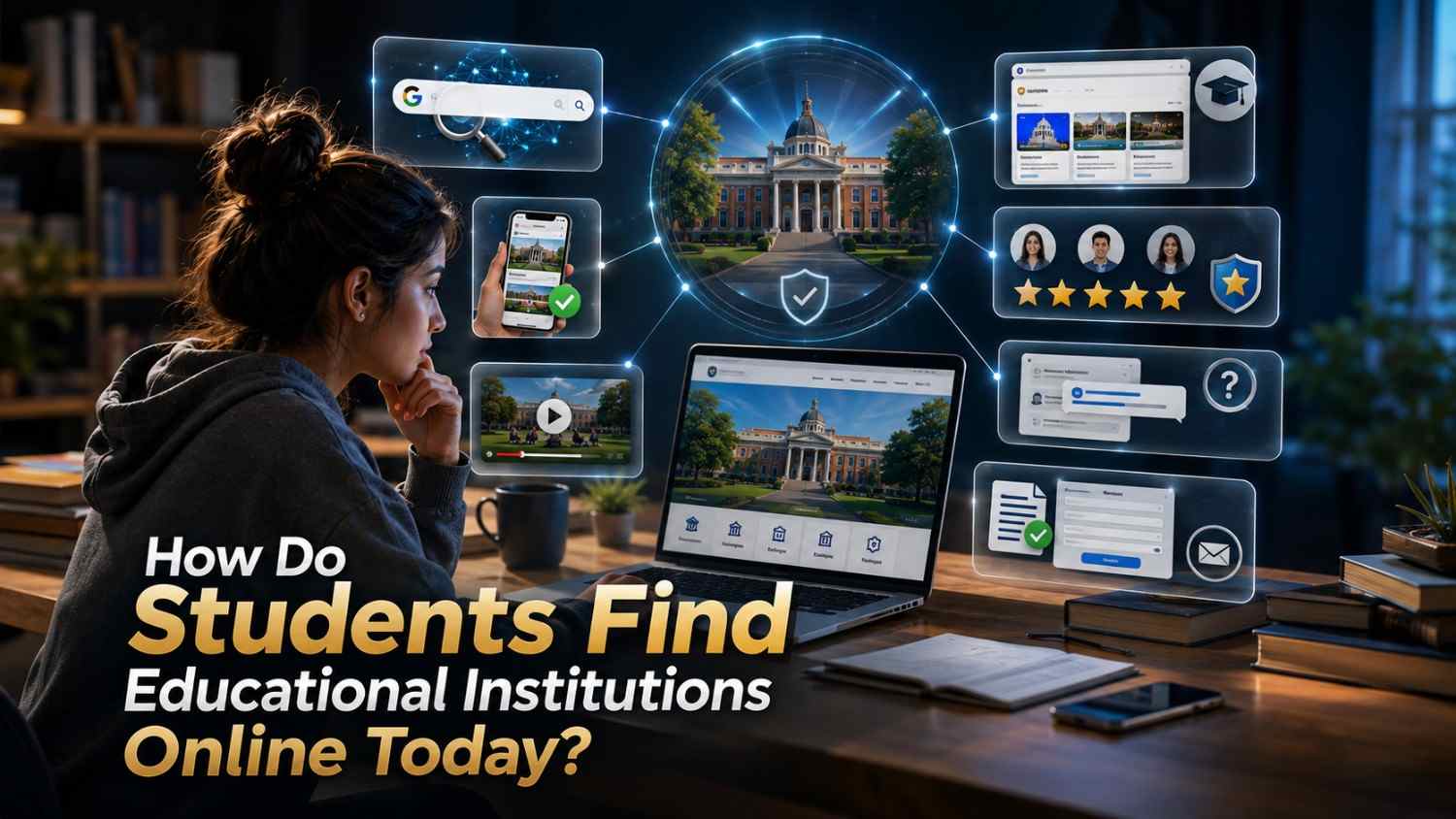
How Do Students Find Educational Institutions Online Today?
Featured Highlights
- Students begin their institution search with Google and AI search
platforms.
- Clear course information builds trust and supports informed
decisions.
- Mobile-friendly websites improve the student browsing experience.
- Genuine student reviews influence admission decisions significantly.
- Videos help students understand campus life before applying.
- Updated content answers student questions quickly and clearly.
- Simple and accurate information creates confidence and encourages
enquiries.
Do you want to know how students search for
educational institutions before they apply? Today, most students begin their
journey online. They compare courses, read reviews, check rankings, and visit
websites before they contact an institution.
Educational institutions that work with an experienced Digital Marketing Agency in Delhi NCR can understand these search habits and attract
the right students at the right time.
Students no longer depend only on newspaper
ads or brochures. They use search engines, AI tools, social media, video
platforms, and review websites.
They expect quick answers and clear
information. This article explains how students find educational institutions
online today and what they expect during their search.
Why Do Students Start Their Search Online?
Most students search online because it is
quick and simple. They can compare different institutions without leaving home.
They also get access to updated information at any time.
They also compare several institutions
before making a final choice. A clear and informative website often creates a
strong first impression.
Students usually search for:
- Courses and specializations
- Admission process
- Eligibility criteria
- Course fees
- Scholarships
- Placement support
- Campus facilities
- Student reviews
- Faculty details
- Location
Online and offline learning options
Which Online Platforms Do Students Use?
Students use different platforms during
different stages of their search. Each platform serves a different purpose.
Google Search
Google remains one of the first places
students visit. They search using simple questions and specific keywords.
Students prefer search results that answer
their questions directly. They also trust websites that provide complete and
easy-to-read information.
Common searches include:
- Best data analytics institute in GTB Nagar, Delhi
- MBA colleges with placements
- Digital marketing course in Delhi
- Top medical colleges in India
- Affordable online degree programs
AI Search Tools
AI search platforms have become part of the
research process. Students now ask complete questions instead of typing only
keywords.
AI tools collect information from trusted
sources and present simple answers. This change has increased the need for
clear, factual, and well-structured content.
Examples include:
- Which college has the best placement support?
- What is the best institute for data science?
- Which university offers
flexible online courses?
Social Media
Students spend a lot of time on social
media platforms. They watch videos, read comments, and interact with current
students.
Campus videos, classroom tours, student
stories, and faculty interviews help students understand campus life.
Popular platforms include:
- Instagram
- YouTube
- Facebook
- LinkedIn
- X
Review Websites
Students trust the opinions of other
students. Genuine reviews often influence their final decision.
Positive reviews build trust. Honest
feedback also helps students set realistic expectations.
They usually look for information about:
- Teaching quality
- Campus environment
- Placement support
- Faculty experience
- Hostel facilities
- Student satisfaction
What Information Do Students Expect to Find?
Students expect complete and accurate
information. They do not want to spend extra time searching across multiple
pages.
Important information includes:
Course Details
Students want clear information about
subjects, course duration, learning methods, and career options.
Admission Process
They expect simple steps that explain
eligibility, entrance exams, important dates, and document requirements.
Fee Structure
Students look for transparent fee details.
They also check scholarship options and payment methods.
Placement Support
Placement information plays a major role in
decision-making. Students often search for placement partners, internship
opportunities, and career guidance services.
Faculty Information
Experienced faculty members increase
confidence. Students prefer institutions that introduce their teachers and
explain their qualifications.
Campus Life
Students also want to know about campus
facilities.
Photos and videos help students understand
the campus better.
This may include:
- Libraries
- Laboratories
- Sports facilities
- Hostels
- Student clubs
- Cafeterias
- Safety measures
Why Do AI-Friendly Content & SEO Matter?
Students now search through Google and AI-powered SEO tools. Educational institutions
must create content that answers common questions clearly.
Simple content helps both students and
search engines understand the information.
Content should answer one question at a
time. Clear headings also improve readability.
When information remains accurate and well
organized, AI platforms can understand it more easily and present it to users.
Useful content includes:
- Course guides
- Admission FAQs
- Career articles
- Scholarship information
- Student success stories
- Placement details
How Do Student Reviews Build Trust?
Students trust real experiences. Reviews
help them understand what they may expect after admission.
They also notice how institutions respond
to reviews. Respectful and professional responses show accountability.
Video testimonials also attract attention
because students can hear experiences directly from alumni and current
students.
Positive reviews often discuss:
- Helpful teachers
- Friendly campus
- Good placements
- Practical learning
- Student support
- Safe environment
What Role Do Videos Play in Student Research?
Video content has become an important part
of online research.
Short videos answer questions quickly. They
also give students a better idea of daily campus life.
Educational institutions that publish
useful videos often keep students engaged for longer.
They enjoy watching:
- Campus tours
- Classroom sessions
- Faculty introductions
- Student interviews
- Placement success stories
- Event highlights
How Can Educational Institutions Reach More Students Online?
Educational institutions should focus on
clear communication instead of promotional language.
Regular updates also improve trust.
Students notice when information appears outdated.
Institutions should also make contact
details easy to find. Quick responses to student questions create a better
experience.
They should:
- Publish accurate information.
- Answer common student questions.
- Keep course details updated.
- Maintain an easy-to-use website.
- Encourage genuine student reviews.
- Share useful educational content.
- Stay active on trusted social platforms.
How Is Student Search Behavior Changing?
Student search habits continue to change as
technology improves.
Today, students prefer conversational
searches. They ask complete questions instead of short keyword phrases.
Voice search has also become more common.
Students ask questions through smartphones and smart devices.
AI assistants now answer educational
questions in seconds. Students expect clear, direct, and reliable information.
Educational institutions that publish
simple, factual, and updated content can meet these expectations more
effectively.
The Bottom Line
Students find educational institutions
online through search engines, AI search platforms, social media, review
websites, and videos. They expect accurate information, simple answers, and
trustworthy content before making a decision. An experienced SEO Agency in Delhi NCR helps educational institutions improve their
online visibility with optimised content and effective search strategies.