Why Should Educational Businesses Combine Seo & Social Media Marketing?
Before You Start -
- SEO
reaches students actively searching for educational information.
- Social
media keeps your institute visible between searches.
- Student
questions can guide website and social content.
- One
topic can create several useful content formats.
- Consistent
information builds stronger trust before admission.
- Track
enquiries, visits, and engagement instead of likes alone.
- Combine
both channels to support the full student journey.
Do you want your educational business to reach students at
the right time? SEO and social media marketing can work together to bring more
visibility, trust, and enquiries.
Each channel serves a different purpose. Together with some
efforts of a digital marketing company in Delhi, businesses can support
a stronger online presence.
Students and parents now use search engines and social
platforms before choosing a course or institute. They may search for a course,
compare institutes, watch videos, read reviews, and check social pages. This
gives educational businesses several chances to connect with them.
How Do SEO & Social Media Marketing Work Together?
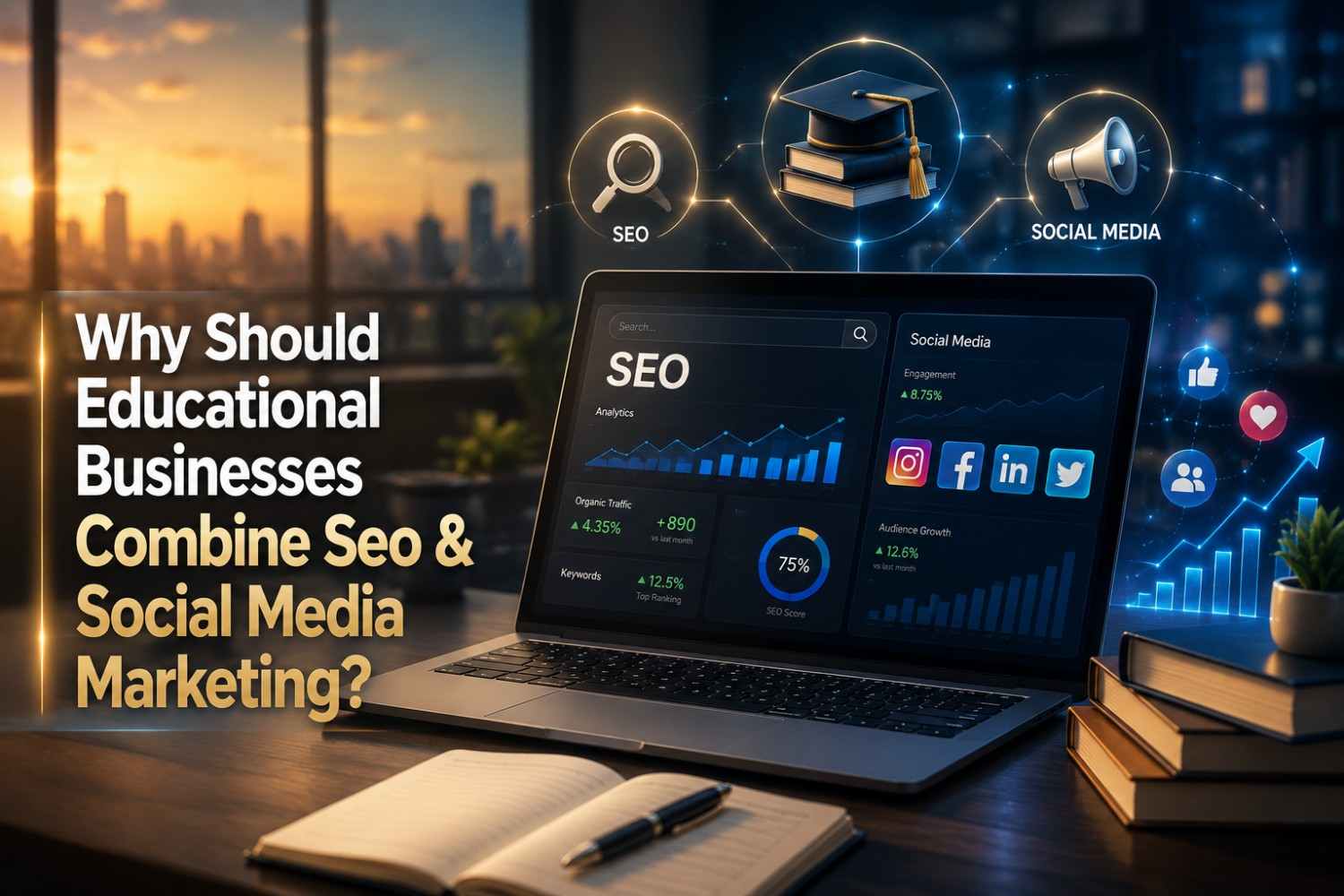
SEO helps your education website appear when people search
for relevant information. Social media helps your brand stay visible when
students spend time on platforms such as Instagram, Facebook, YouTube, and
LinkedIn.
The two channels serve different stages of the decision
process.
For example, a student may search for “best digital marketing course in GTB Nagar.” Your
SEO content can answer that search. Later, the same student may see your course
video on Instagram. That repeated exposure can build familiarity.
SEO mainly supports search-based discovery. Social media
supports regular interaction and brand awareness.
The key is to keep the message consistent across both
channels.
A strong strategy can use both channels to:
- Bring
relevant visitors to your website
- Answer
common student questions
- Build
trust before admission
- Share
course updates and useful content
- Generate
enquiries from different sources
- eep
your brand visible after the first visit
Why Is SEO Important for Educational Businesses?
SEO can bring students who already have a specific question
or need. This makes search traffic especially useful for educational
businesses.
A student may search for “data analytics course in Delhi” or “digital marketing course fees in
Delhi.” These searches show clear interest in a subject.
Your website can answer these questions through useful pages
and articles. If the content matches the search intent, the page has a better
chance of reaching the right audience.
What Can Educational Businesses Target With SEO?
Educational businesses can create content around different
search needs.
This approach gives search engines useful information to
understand. It also gives students direct answers before they contact the
institute.
These can include:
- Course
fees and duration
- Eligibility
requirements
- Course
syllabus
- Career
options
- Job
roles after a course
- Skills
students need
- Online
and offline course options
- Institute
comparison questions
- Admission-related
questions
- Course-specific
FAQs
How Does Social Media Support SEO Efforts?
Social media does not replace SEO. It gives your content
another place to reach people.
Suppose your website publishes an article about career
options after a data analytics course. You can turn the main points into a
short Instagram carousel, LinkedIn post, or YouTube video.
The social post can then direct interest users to the full
article.
This creates a simple content connection:
Website Article Then Social Post Then Student Engagement
Then Website Visit Then Enquiry
Social platforms also give educational businesses direct
feedback. Comments and questions can show what students want to know.
For example, if students often ask about course duration,
you can create a short video on that topic. You can then add the same question
to your website FAQ section.
This gives your content a stronger connection with real
student concerns.
Can Social Media Build Trust Before Admission?
Yes. Social media can show what an educational business
actually does.
Students often want proof before they choose a course. They
may want to see classrooms, trainers, student activities, projects, events, or
course sessions.
Social media provides a simple way to show these details.
This type of content gives people a clearer idea about the
institute.
Educational businesses can share:
- Short
lessons from trainers
- Student
project examples
- Classroom
videos
- Course
tips
- Student
questions and answers
- Workshop
updates
- Faculty
introductions
- Course-related
mistakes to avoid
- Career
guidance videos
- Student
experiences
Why Should Educational Businesses Use Both Channels?
Using only one channel can limit your reach. Search and
social media attract users in different ways.
SEO can reach someone who actively searches for a solution.
Social media can reach someone who has not started a search yet.
Consider a student who wants to learn graphic design but has
not selected an institute. They may watch graphic design videos on Instagram
before searching for courses.
Later, they may search for “graphic design course near me.”
If your website appears in search results and your social profile already feels
familiar, the student may be more likely to consider your institute.
How Can Educational Businesses Combine SEO and Social Media?
Start with the questions students ask most often. These
questions can guide both website and social media content.
Find Real Student Questions
Talk to admission teams and trainers. Check questions from
calls, chats, comments, and enquiries.
These questions can become website articles, FAQs, videos,
and social posts.
Look for questions such as:
- Is
this course suitable for beginners?
- How
long does the course take?
- What
will I study?
- What
jobs can I apply for?
- Do
I need prior experience?
- Is
the course available online?
- What
projects will I work on?
Create One Strong Topic
Choose one useful topic instead of creating unrelated posts.
For example, take the topic “How to start a career in
digital marketing?”
The information should remain consistent across every
format.
You can create:
- A
detailed website articles
- A
short Instagram videos
- A
LinkedIn posts
- A
YouTube explanation
- A
short FAQ
- A
course-related social post
Connect Social Posts With Website Content
When a social post discusses a topic in detail, direct
interested users to the relevant website page.
The website should then provide the full answer.
This creates a clear path from social engagement to website
research.
Track What Students Respond To
Look at website visits, search queries, social engagement,
video views, and enquiries.
Do not judge content only by likes.
A post with fewer likes can still bring useful enquiries. A
search page with steady traffic can also support admissions over time.
Use these results to decide which topics deserve more
content.
What Mistakes Should Educational Businesses Avoid?
The biggest mistake is treating SEO and social media as
separate activities.
A business may publish SEO articles without sharing them.
Another may post regularly on social media without giving users useful website
information.
Both approaches can leave gaps.
Educational content should answer questions first. Promotion
should support the information rather than replace it.
Avoid these common mistakes:
- Posting
only promotional content
- Repeating
the same message on every platform
- Writing
content only for keywords
- Ignoring
student questions
- Using
unclear course information
- Making
claims without proof
- Publishing
outdated course details
- Focusing
only on likes and followers
- Sending
every social visitor to the homepage
What Should an Educational Business Do First?
Start with the topics closest to student decisions. Build
useful website pages around those topics. Then turn the same information into
social content.
For example, an institute can create a detailed page about
its digital marketing course. It can then create separate social posts about
the syllabus, tools, career roles, course duration, and common beginner
questions.
This gives students useful information at different points
in their research.
The approach also creates a steady content system. Instead
of searching for a completely new topic for every post, the business can build
several useful formats from one strong subject.
The Bottom Line
SEO and social media marketing from
a digital marketing agency in
GTB Nagar give educational businesses two ways to reach students. SEO
captures search interest, while social media builds regular interaction and
trust. When both channels share useful and consistent information, students can
find answers across their research journey. A combined approach can support
website traffic, brand visibility, and better-quality course enquiries.